
A brief overview of my scientific career

Environmental Science
Since 2022 I have been working at the Natural History Museum in London, studying the impact of marine plastic pollution on seabirds and other wildlife. I held a Marie Skłodowska-Curie fellowship from 2022-2024, and I am currently a researcher on the NG-Plastics project for the Nunatsiavut Government and CINUK partnership.
My research focuses on measuring the different properties of plastic fragments removed from seabirds’ stomachs, in order to better understand how the plastic is harming marine life. We hope that by identifying the most harmful aspects of plastic, we can change how we make, use, and dispose of plastics and reduce their impact on wildlife.
Planetary Science
From 2018 to 2021 I worked on the Perseverance Mars rover mission at NASA’s Jet Propulsion Laboratory in California. My work focused on calibrating and operating SHERLOC, a Raman and fluorescence spectrometer and science instrument mounted on Perseverance‘s robotic arm.
On the 19th of February 2021, the rover landed safely in Jezero Crater and began its multi-year exploration mission. Since then, I’ve helped the team plan surface operations for the rover, analyse data collected by SHERLOC, and report findings to the scientific community.

Plastic Electronics
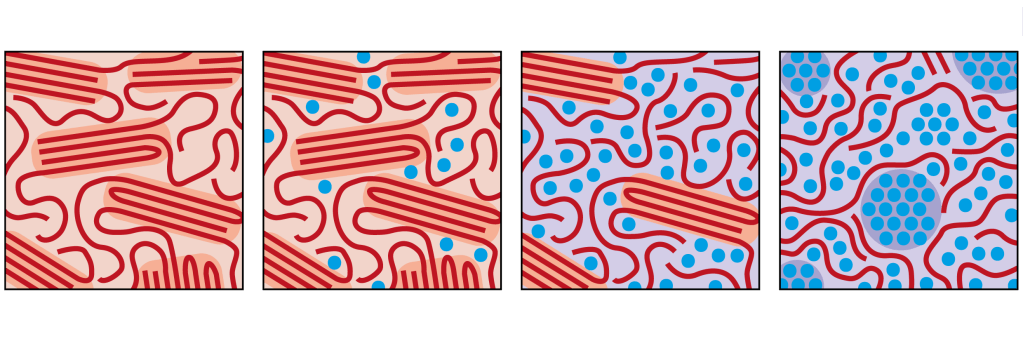
In 2016 I completed my PhD at Imperial College London, where I studied organic photovoltaics (OPVs), a new generation of solar panels based on cheap, printable organic materials.
My PhD focused on understanding how these new materials behave at the molecular level, and how this behaviour impacts their performance and stability in solar panels.
Chemistry
I started my career in science at Sussex University, where he completed an undergraduate Masters degree in chemistry, later specialising in physical and theoretical chemistry.
My Masters dissertation was on theoretical chemistry, studying the diffusion pathways of lithium ions inside graphite lattices used as cathodes in lithium batteries.

 Joby Razzell Hollis